Monday, 21 March 2022

Energy from waves

Today's new ELI continues our series of 'net zero' emissions activities - 'Harnessing the power of waves; investigating the development of wave power.'

Wave power can be produced by the up and down motion of floating devices placed on the surface of the ocean. This activity is an investigation into the use of wave power to generate electricity; much research is taking place about this at the moment.

The complete series of ELI 'net zero' emissions can be viewed here.

Monday, 14 March 2022

Water cycle game for young children

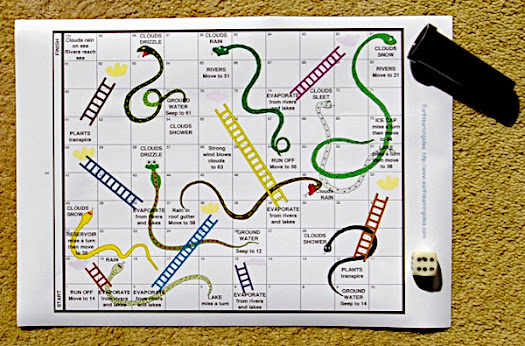
Teaching the water cycle? This morning we have another game for you to try but this time for young children - 'Watery world game; climb through the watery world but watch out for snakes!'

The game can be played in any science or geography lesson and has cross curricular links with literacy and numeracy. It is also a useful water cycle introduction or revision exercise.

Other related activities can be found here.

Monday, 7 March 2022

Fishing game - beware of overfishing

The new ELI today is 'The fishing game : beware of overfishing; a game showing how fish stocks should be managed sustainably'.

A game to be played in pairs or groups to find the group who can manage their fish stocks sustainably. ‘There are plenty more fish in the sea’ is a commonly-used phrase, but is it still true today? Many studies have shown that, when there is over-fishing, the stocks of fish can ‘crash’, which is not only a problem for the fish, but also for the men and women who fish for them. However, when fishing is managed sustainably it can continue in the long term.

Many more activities relating to our environment can be found here.

Monday, 28 February 2022

Geothermal power simulations

Following up on last week's activity, today we have 'Rock power: geothermal power simulations; modelling geothermal power sources – renewable or not?'

This activity uses a density can filled with gravel to model different forms of geothermal power source. Many more activities related to power sources can be found on our website.

Monday, 21 February 2022

In memory of Chris King: Geothermal power from 'hot dry rocks'

With great sadness we inform you that Chris King died on 17th February. He was the originator and inspiration for Earthlearningidea. He will be greatly missed, especially by the Geoscience community across the world.

We shall continue publishing new activities, keeping Earthlearningidea active in his memory:

The new ELI today is 'Deep geothermal power from ‘hot dry rocks’: an option in your area? A discussion of potential for extracting ‘hot dry rocks’ geothermal energy locally'.

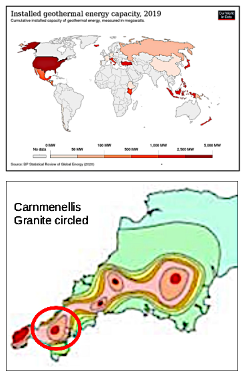
This activity considers the ‘hot dry rocks’ geothermal potential in the UK through an experimental commercial project in Cornwall.

Many activities about power supplies can be found in our Topics and Teaching Resources on the website.

Monday, 14 February 2022

Amazing Planet at the ASE virtual conference

Join us on Saturday February 19th for AMAZING PLANET to be presented at the virtual ASE Conference.  Two members of the European Geosciences Union (EGU), will present a quick-fire selection of activities from Earthlearningideas. These are designed to enable teachers to encourage a sense of wonder at Planet Earth among their pupils.

The session will introduce ten processes which take place inside the Earth. These will include 'Quake shake', showing in a few seconds how parts of Mexico City might topple over as the old lake bed upon which it is built liquefies under seismic shaking.

'Magnetic Earth' will demonstrate the Earth’s magnetic field with a Plasticine sphere and a Magnaprobe.

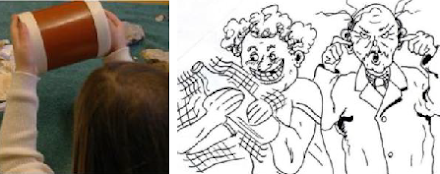
Aspects of seven surface processes will be demonstrated, including 'Rock rattle and roll', an enjoyable, noisy activity reproducing erosion by shaking rock fragments in a plastic bottle.

Various ways of representing Earth processes using your fingertips will also prove to be a fun way of learning principles such as the Rock Cycle.

The session is intended as a rapid introduction to the activities, of which there are now 384 freely available on the website. Each activity consists of one or two illustrated pages describing how to carry it out, with another page or two of the rationale for teachers.

Monday, 7 February 2022

What to do with high-level radioactive nuclear waste?

The new ELI today continues our series of activities about how to reach 'net zero' emissions targets. 'Nuclear waste disposal; investigating geological disposal facilities (GDFs)'.


This activity explores geological disposal facilities (GDFs) as a solution to the problem of what to do with high-level radioactive nuclear waste?

Many other activities in the series can be found here.