Monday, 30 September 2019

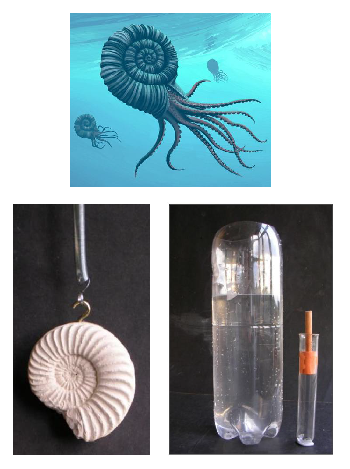
Ammonites in the sea

'How did ammonites adjust their position in the sea? - The ups and downs of ammonites'

This clever demonstration shows how some animals which are buoyant in water can change their depth in the sea.
More activities relating to fossils can be found in the Evolution of Life category on our website.
'

Monday, 23 September 2019

Does sea level change when ice caps melt?

Today's new ELI is 'Melting ice and sea level change 2 – ice caps: does sea level change when ice caps melt?'


The outcome of this activity is rather obvious: when continental ice sheets melt, sea level rises, and could rise by several metres if all the world’s land-based ice sheets and glaciers melt. However, taken with the work on the ‘sea ice’ in the 'Melting ice and sea level change 1 – sea ice' Earthlearningidea activity (where melting does not cause sea level rise) it will remind pupils of what happens and should enable them to handle press reports more critically.
Search our website for other activities related to climate change.

Monday, 16 September 2019

Journey to the centre of the Earth – on a toilet roll

'Journey to the centre of the Earth – on a toilet roll: just how thin is the crust we live on?'


We seldom stop to consider the true scale of many features of the Earth. This activity aims to enable pupils to visualise the thickness of the crust in relation to the rest of the Earth. It also helps them to appreciate the difference in depth between the oceanic crust and the continental crust. It introduces the terms ‘lithosphere’ and‘asthenosphere’ to help in understanding plate tectonic theory.
Visit our website for other related teaching ideas.


Tuesday, 10 September 2019

Does sea level change when floating sea ice melts?

The new ELI today is 'Melting ice and sea level change 1 – sea ice: does sea level change when floating sea ice melts?'


This activity investigates the impact on water levels of allowing floating ice to melt. There is much misunderstanding of the impact on world sea level of melting sea ice, which this simple activity should dispel.
Many more activities about climate change and the changing state of ice can be found on our website.

Monday, 2 September 2019

Pressures underground

From our ELI+ series - 'Under pressure: calculating the intense pressures underground'


This activity uses lab measurements of the force applied by different depths of sand and water to calculate their downward pressure and then uses these figures to extrapolate to likely pressures at crustal depths.
Many more ELI+ activities can be found on our website.

Monday, 26 August 2019

Recreating the rocks – step by step

The new ELI today is 'Recreating the rocks – step by step: simulating a dipping sedimentary rock sequence though a sequence of Earthlearningideas'.


This teaching strategy can be carried out in the field in front of a dipping sedimentary sequence or in the classroom with an image of such a sequence on a screen. It helps pupils to understand step by step the creation of the sedimentary rocks they can see.
Many more inspirational ideas about how to teach about the landscape around us can be found on our website either by using the alphabetical index or the search engine.

Monday, 19 August 2019

Developing a strategy for evaluating the environment

'Environmental evaluation; developing a strategy for evaluating the environment'


In this activity, pupils are given a scale to use in environmental evaluation, and then asked to apply this scale to different environmental circumstances, that can range from a local small environment to a panoramic view. The objective of the activity is to develop an evaluative approach to environments of all types, which pupils can apply wherever they are in the future.
Many other activities relating to field work and the enironment can be found on our website.