Showing posts with label Evolution of Life. Show all posts

Monday, 12 January 2026

Solve the mystery of the dinosaur footprints

Today we are continuing to look at footprints with 'The meeting of the dinosaurs - 100 million years ago; the evidence given by dinosaur footprints'.


Fossil tracks, such as footprints, can provide a great deal of evidence about the environment at the time when they were made and about how the animals lived and moved.

Related activities can be found in our Dinosaurs, Evolution of Life category.


Monday, 5 January 2026

Making footprints in sand for others to interpret

Our new ELI today is 'What were the animals doing? Interpreting footprints and other marks in the sand.'


Footprints and other traces of animals, found as fossils, can tell us a great deal about what the animals were doing at the time. Pupils make footprints in sand for others to interpret. This is great fun!

Related activities can be found in our Evolution of Life category - dinosaurs.

Monday, 8 December 2025

Monday, 1 December 2025

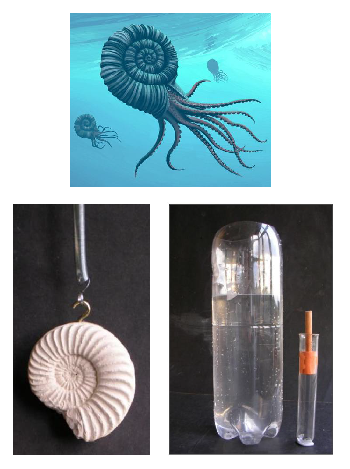
How did ammonites try to escape their predators?

And now for something completely different . . . 'The ups and downs of ammonites; how did ammonites adjust their position in the sea'.

This activity demonstrates how some animals which are buoyant in water can change their depth in the sea.

Related activities about fossils can be found in our Evolution of Life category - Fossils (mostly invertebrates).

Monday, 18 December 2023

Who ate the ammonite?

We continue our fossils theme with 'Who ate the ammonite? - a Jurassic food web - from fossil evidence'.

This activity could be included in any lesson which involves discussion about carnivore/herbivore, predator/prey relationships, building food chains/webs, producers/consumers and trophic levels.

Many more ELIs about fossils and dinosaurs can be found in the Evolution of Life category.


Monday, 11 December 2023

Fossils game

 Today the new ELI is another in the 'picturing' series - - - 'Picturing Fossils 2: visualise and draw fossils from a verbal description'.

This activity enhances pupils’ skills of description and interpretation using photographs of fossils. This could form a useful revision activity and is fun to do either with photos or real specimens (which must be kept hidden).

Related activities can be found in our Evolution of life category.


Monday, 20 November 2023

Continuing our preservation theme . . . 'How could I become fossilised?
Thinking through fossilisation in the context of me or you'.

In this activity, pupils think through the decay processes that the human body is likely to be involved in as it moves towards fossilisation - as a means of gaining
understanding of fossilisation processes and what fossils are.

In our 'Fossils' section of the Evolution of Life category, there are many other activities.


Monday, 13 November 2023

Bog bodies - preservation in peat

The new ELI today is 'From hard-boiled eggs to bog bodies; an investigation into the effects of tannin and mild acid'.

Exceptional preservation of animals and plants takes place when they have fallen into peat bogs within the last 10,000 years. This activity allows pupils to investigate the effects of tannin and a mild acid in this process.

Other related activities can be found in our Evolution of Life category.

Monday, 18 September 2023

Make your own scary scorpion and imagine how it lived

New ELI -  'Scary scorpions; make your own scorpion and imagine how it lived'.

This ELI gives an introduction to fossil aquatic scorpions; bringing the animal back to life and investigating the Silurian seas. You can also have fun making your own scary scorpion.

Related activities can be found in 'Evolution of Life' or, for a younger age group, in 'ELI Early years'.


Monday, 11 September 2023

How to work out the lifestyle of an extinct animal

Continuing our fossils theme - - 'Curious creatures; using fossil and modern evidence to work out the lifestyles of extinct animals'.


Life on Earth diversified around 500 million years ago when shells and skeletons appeared for the first time in the fossil record. All animal life today probably evolved from some of these creatures while others became extinct.

Many related activities can be found in our 'Evolution of Life' category.


Monday, 4 September 2023

Draw and describe the fossil - can you name it?

The new ELI today is another in our 'picturing' series - 'Picturing Fossils -1: visualise and draw fossils from a verbal description'.

 
This activity enhances pupils’ skills of description and interpretation using photographs of fossils.
 
Many related activities can be found in our 'Fossils' Evolution of Life category.

Monday, 16 August 2021

Fossil hunter - dig up a dinosaur

A good activity for the summer in a sand pit or on the beach is 'Dig up the dinosaur; become a fossil hunter and dig up a dinosaur'. All you need is a wooden or plastic dinosaur skeleton.

Click here to watch a short video of the activity.

The activity involves digging up buried ‘bones’ in a systematic manner and reconstructing the skeleton. By observing how the 'bones' were found, you can determine whether the creature was buried suddenly or not.

Many other activities related to fossils and dinosaurs can be found on our website.


Monday, 5 April 2021

Weighing a dinosaur?

The new ELI today is 'Let’s weigh that dinosaur! How can a plastic model reveal the mass of an actual dinosaur?'

This Earthlearningidea is a class activity to estimate the mass of a dinosaur using a plastic model. It provides one method of estimating the mass of an extinct animal. The result can be compared with textbook values and with results obtained by alternative methods, based on measurements such as the depth of animal footprints (as demonstrated in 'How to weigh a dinosaur') or the size of the thigh bone.

Other ELIs related to dinosaurs and fossils in general, can be found in the Earthlearningidea 'Evolution of life' category.
 

Monday, 8 March 2021

What did kill the dinosaurs?

New ELI today  'Extinction mystery; what did kill the dinosaurs?'

This activity is a card sorting exercise involving deciding which factors might have contributed to the extinction of the dinosaurs.

There are many misconceptions about how dinosaurs became extinct. The mystery encourages pupils to put evidence into a sequence so that they can explain some of the possible causes of the extinction.

Many more activities can be found about dinosaurs by using the search engine or alphabetical index on our website.


Monday, 6 July 2020

'Shell shake – survival of the toughest; why is the fossil record incomplete?'


Pupils deliberately smash a variety of seashells to see which ones are strong enough to remain recognisable, and which ones are so weak that they would leave little or no evidence of their existence. This leads pupils to realise that the fossil record is often biased. Many organisms are destroyed by being eaten or by being broken up into tiny fragments by moving water, or by processes of lithification of the host sediment. This lesson demonstrates that a slab of apparently well-preserved fossils may not present a true record of all that lived there, so caution is needed in reconstructing the ancient environment in its entirety.
Many more activities in the Evolution of Life category can be found on our website.

Monday, 30 September 2019

Ammonites in the sea

'How did ammonites adjust their position in the sea? - The ups and downs of ammonites'

This clever demonstration shows how some animals which are buoyant in water can change their depth in the sea.
More activities relating to fossils can be found in the Evolution of Life category on our website.
'

Monday, 22 July 2019

What are trace fossils?

'Trace fossils – burrows or borings; what evidence do living organisms leave behind in rocks?'


This activity invites pupils to apply previously learned observations about the features of modern bivalve shells to the fossil record. Adaptations to different habitats are reflected in the shell structure of bivalves. This understanding is applied to working out what ancient environments were like from the trace fossils left behind by similar organisms.
Many activities related to fossils can be found in the Evolution of Life category on our website.

Monday, 10 June 2019

Sea shells and their habitats

Sea shell survival; how are common sea shells adapted to their habitats?


This activity gives an an introduction to the relationship between the features of shells of bivalves and their habitats. Many marine animals are specially adapted to give them the best chance of survival in their habitats. These adaptations are reflected in their shell structure. This ELI may be used as a prelude to determining ancient environments from the fossil remains or from the traces of similar organisms in rocks.
Many more activities related to fossils and past environments can be found on our website in the 'Evolution of Life' category.


Monday, 15 April 2019

Bringing a fossil 'back to life'

A popular ELI is 'Running the fossilisation film backwards; bringing a fossil ‘back to life’'


This is a thought experiment, including possible re-enactment, to recreate the likely ‘final moments’ of an animal which later became a fossil. The activity provides examples of how to ‘run the fossilisation film’ backwards to help pupils to visualise what a fossil may have looked and acted like during life and in the few moments before death.
Many more fossil-related activities can be found on our website.

Monday, 18 March 2019

Evidence given by dinosaur footprints

'The meeting of the dinosaurs - 100 million years ago; the evidence given by dinosaur footprints'


Fossil tracks, such as footprints, can provide a great deal of evidence about the environment at the time when they were made and about how the animals lived and moved.
Other activities involving dinosaurs can be found on our website.